
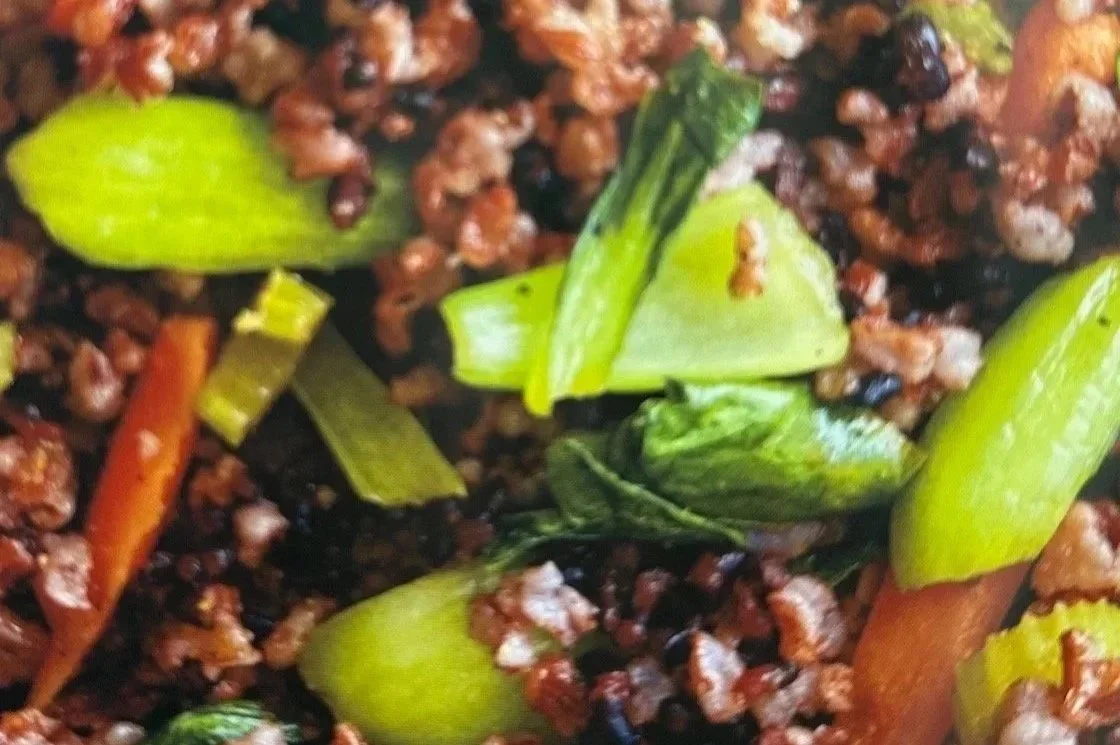
I’ve been eating a lot of rice lately. Knowledge is power, and I’m certainly learning what makes my gut happy, which means digestive bliss. Food is medicine! We all need to remember that. When I shop for rice, I look for high-quality, organic grains: white rice (Lundberg Rice – easier to digest), red rice, and black (forbidden) rice, which is rich in antioxidants, fiber, and protein (I use Lotus Foods). Some even use black rice in desserts – how cool is that?! Rice is nourishing, energizing, gluten-free, and has a slightly sweet taste. Rice is your friend, not foe.
In Ayurvedic texts, the ancient Indian medical tradition glorifies red rice as one of the best types of rice because it is low-glycemic index and balancing for everybody. It cooks in only 20 minutes. Black rice (or forbidden rice) originated in ancient China, where it was known as ‘longevity rice’ and reserved for the emperors. Both rices serve as an excellent source of minerals.
One of my teachers, Divya Alter, shares this recipe in her cookbook What To Eat For How You Feel. I made a few modifications – less salt and omitting the cashews as a garnish. Divya made her own Ayurvedic modifications after being inspired by the authors of Green Kitchen Travels.
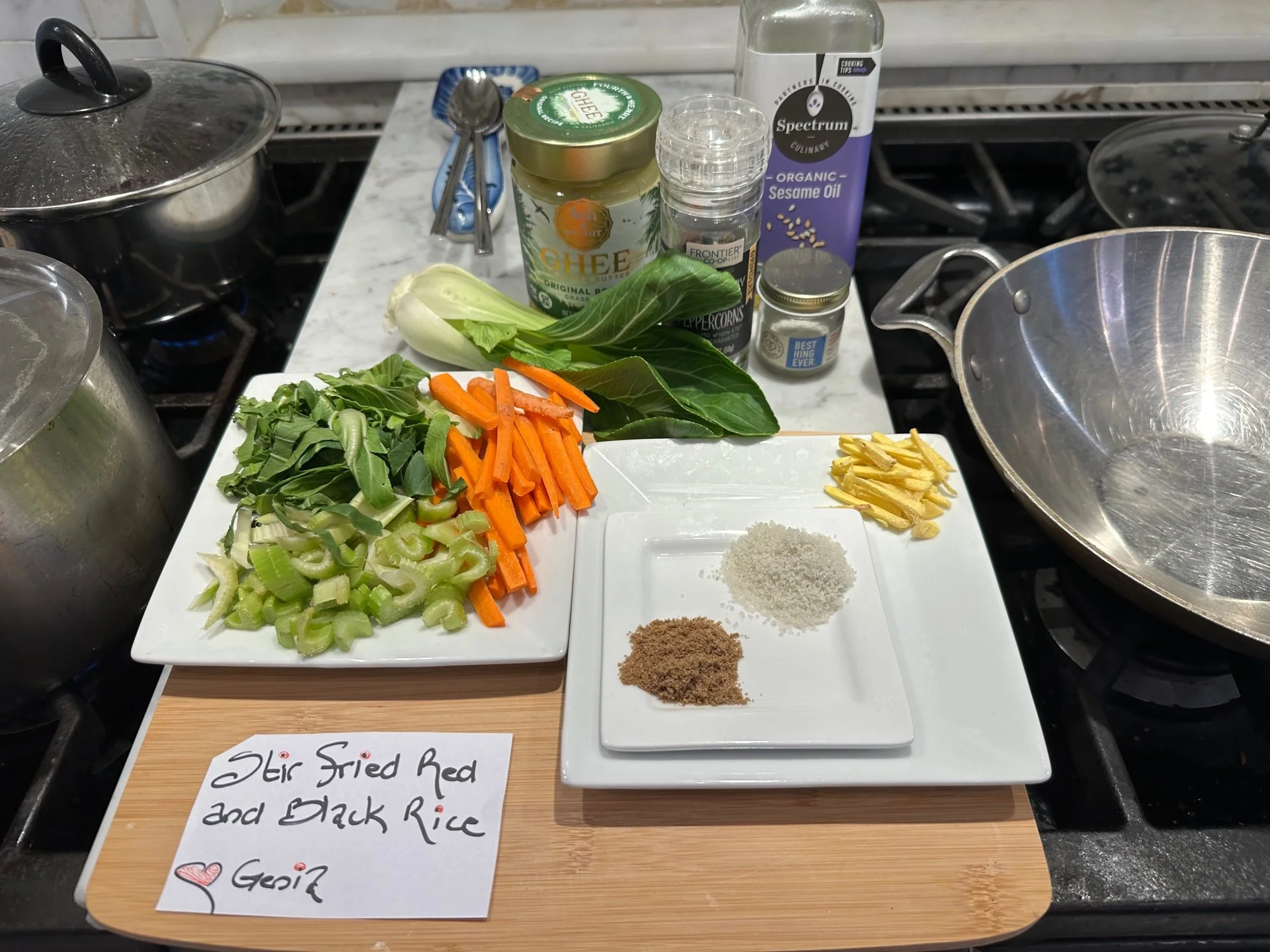
Mise en place
Recipe (serves 4)
¼ cup black rice - rinsed, soaked for 30 minutes and drained
¾ cup red rice - rinsed, soaked for 30 minutes and drained
1 tsp salt
1 tbsp ghee/sesame or coconut oil
1 tbsp thinly julienned fresh ginger
1 tsp ground coriander
1 large carrot, cut into ¼-inch wide and 2-inch long strips
2 celery sticks, thinly sliced
1 head baby bok choy or spinach – 1 cup full
¼ tsp freshly ground black pepper
Optional: small pinch of hing (asafoetida)
Garnish: small handful fresh basil leaves, torn into pieces
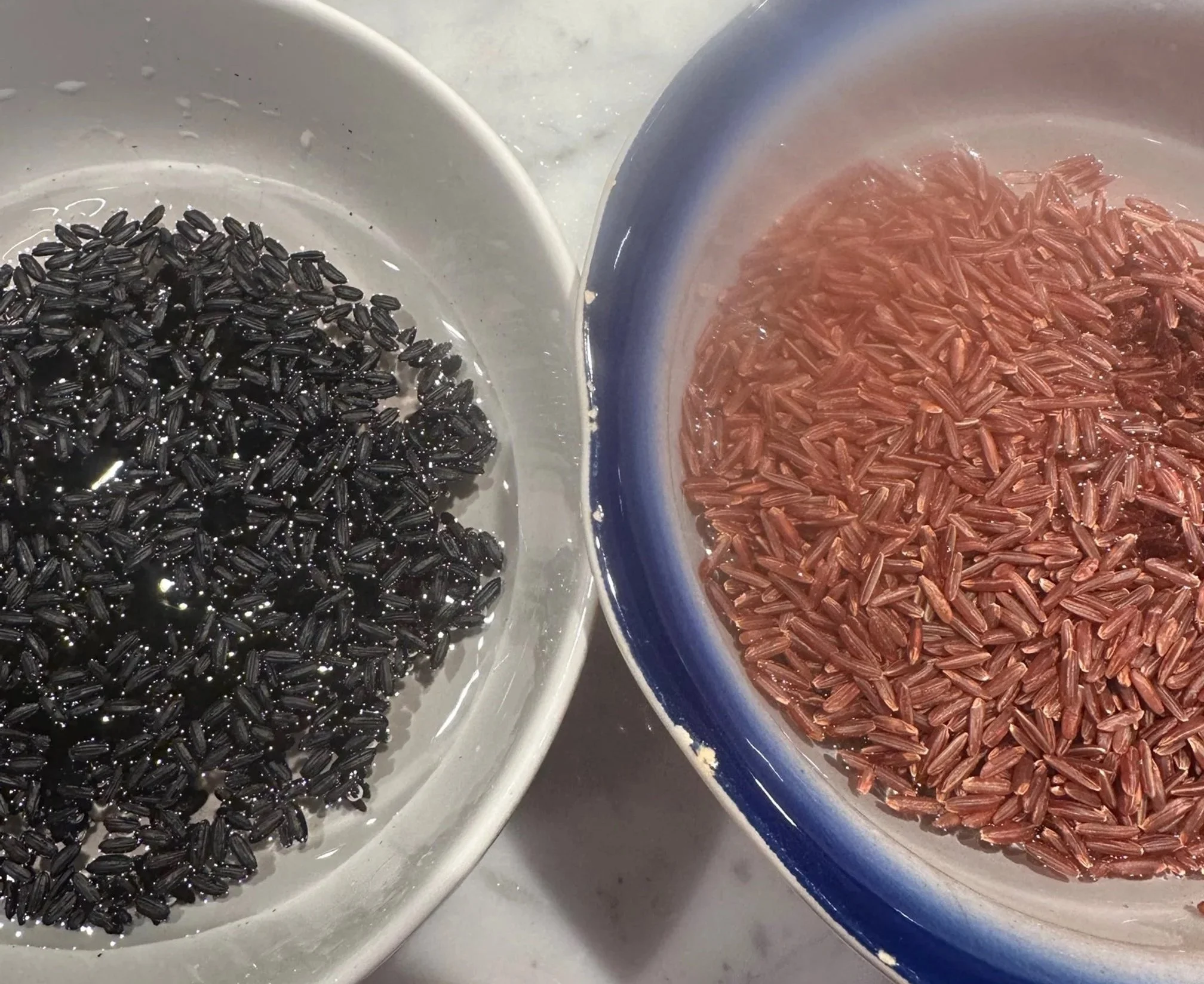
Soaking my red and black rices for 30 minutes – rinse and drain
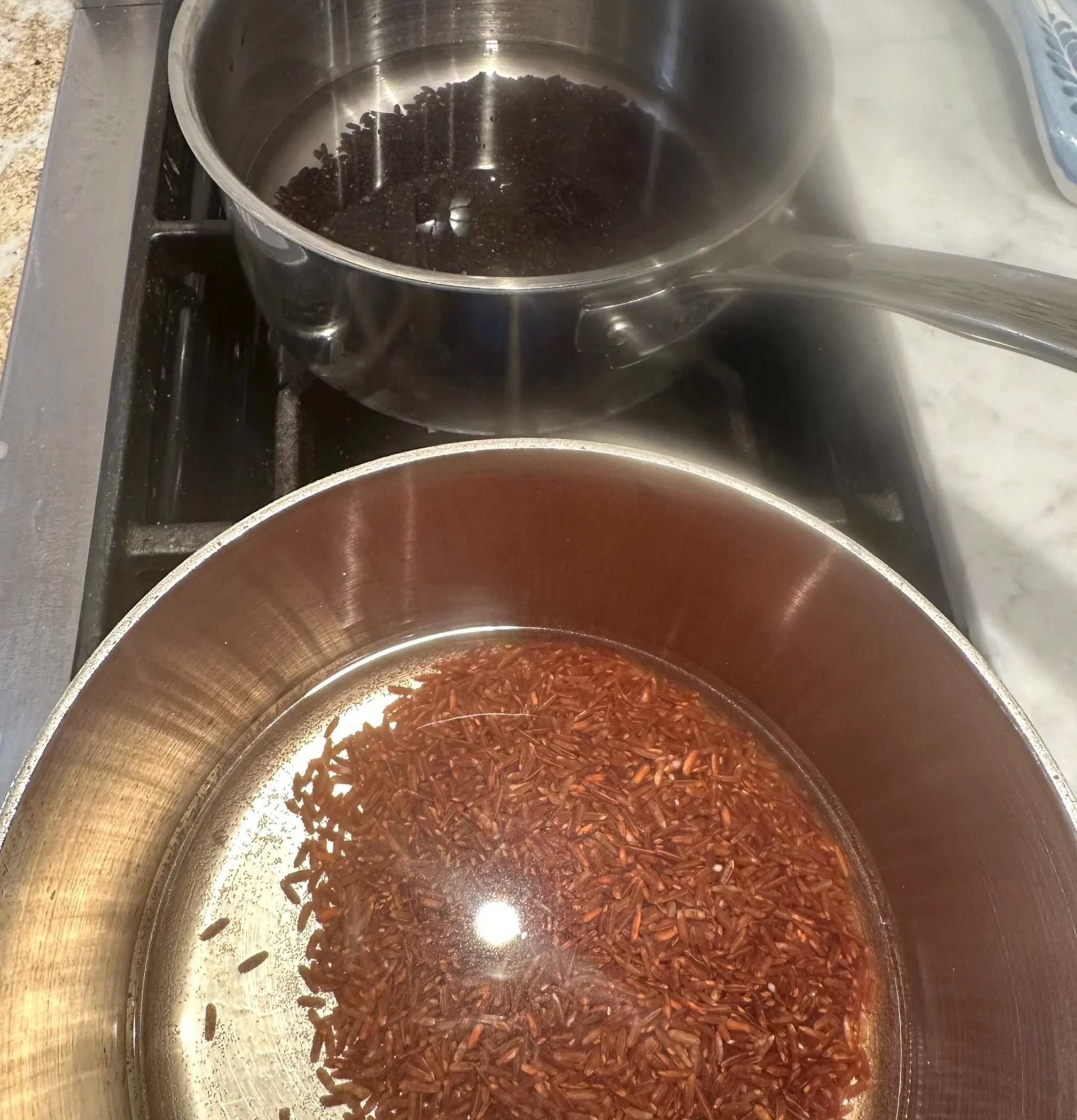
The rices cook separately to preserve their gorgeous colors – food is art
Instructions
Combine the black rice with 1 ½ cups of water and ¼ tsp salt. Bring to a boil over medium-high heat, then lower the heat, cover, and simmer for 30-40 minutes until the grains are soft. Drain any excess water and set aside uncovered for 5 minutes until grains firm up, then fluff with a fork
In another small saucepan, combine the red rice with 2 cups of water and ¾ tsp salt. Bring to a simmer over medium-high heat, then lower the heat, cover, and simmer for 20 minutes, or until the grains are soft. Drain any excess water and set aside uncovered for 5 minutes to let the grains firm up. Fluff with fork
While the rice is cooking, heat 1 tbsp ghee in a wok or skillet over high heat. Add the ginger and crisp it for 15 seconds, then add the following ingredients in consecutive order: coriander, hing (optional), ½ tsp salt, carrot, celery, and bok choy or spinach
Stir-fry for 5-10 minutes, until the vegetables are crisp, tender, and slightly browned in parts
Cover the pan with a lid for the last 3 minutes to speed up the cooking and season with pepper
Add the cooked black rice and red rice, reduce heat to medium-high, and stir-fry for another 3-4 minutes, until the grains are warmed through
Genia’s Spoon Me Tips
Cooking the red and black rices separately preserves their distinct colors when you add them to the larger dish. If you cook them together, the black rice will overpower the red rice. I made the hing (asafoetida in English) ingredient optional – a little goes a long way, but worth exploring. Hing, which comes from Afghanistan and Iran, creates a unique taste and aroma. “The taste can be shocking for a western palette,” says Kate O’Donnell, author of The Everyday Ayurveda Cookbook. She offers it as an optional spice in her recipes.
You can serve the rice with sautéed leafy greens, broccoli rabe, and cauliflower – these are all great ways to add more greens into your diet.
Much Love,
Genia